The Feminist Fairytale about Butch/Femme

Does butch/femme reinforce traditional gender roles? Is it sexist? Misogynistic? Does being a femme mean that you’re a nurturing “little wife” who “stands by her butch?” A sex kitten who is required to perform an idealized fantasy of feminine perfection? Do butches and other transmasculine people get to “wear the pants” (both literally and metaphorically)–defending and protecting “their” femmes– while femmes have less power? Is it really possible to be a feminist butch or a feminist femme–not just in theory, but in practice?

Sometimes it seems like these questions just won’t go away. This post is my very personal–and political–response. My feminism is about freedom of gender expression. I insist upon being respected as a femme but I refuse to be confined to someone else’s definition of what that means. I’m smart, confident, and successful. I love being pretty and sexy but I’m not an ornament or arm candy. Being femme does not mean that I will abide by the traditional self-sacrificing requirements of femininity–the idea that women must reliquish their freedom and autonomy, dreams and desires, to find fulfillment. I like to please my partner, but I will not subordinate myself to make her happy. You don’t like my amazing new outfit? Oh well, that’s too bad because I love it and feel great in it!

For me, femme doesn’t mean that I’m locked into some naturalized gender role, as I think all too often happens (particularly for women) in heterosexual relationships. But I’ll admit, that’s not always easy. There have been times when I felt like I was slipping into a “wifey” role, and I had to work to get that fantasy image of femininity out of my head. (There’s a huge difference between *wanting* to do domestic stuff and *having* to do it.) I imagine that some butch/femme couples do organize their lives in ways that echo traditional gender roles, but that hasn’t been my experience.

There is nothing inherently anti-feminist or sexist about butch/femme identities or desires. What I think is confusing about femme in particular and butch/femme in general is that it can look a lot like naturalized gender identity/roles at first glance. For example, you’ll never see me change the oil in the car or install new faucets–my partner (who ID’s as butch) does that stuff. I clean the bathroom and do most of the cooking. I take out the trash sometimes, and if I break a nail, I’m pissed. (Actually I’m always pissed if I break a nail!) My partner is usually not comfortable in the kitchen but she can be counted on to make a great tortilla soup. We both value and respect each other’s work. There have been times when I’ve been the breadwinner, other times when she’s supported me financially, and times when we’ve both contributed to our household income. We both have equal power in the relationship when it comes to making decisions, which we make together. She came home with flowers for me today, just because.

The contradictions in masculinity and femininity are a part of us and our relationship, just like they are for most other couples. But when others imply that our relationship is somehow more sexist than theirs, I think they’re projecting their own anxieties about gender onto us.

The notion that butch/femme is sexist is a feminist fairytale we need to stop telling.

A Very Wicked Femme

When I was a kid and The Wizard of Oz came on TV every year, my little sister and I would always watch it, knowing that the appearance of the Witch would scare my sister into leaping under a table or bed, while I soaked it all in, riveted: the flash of green and black, the awe-inspiring powers (I want to fly too!), the dutiful flying monkeys, the sheer drama of it all.

In addition to her supernatural powers, the Wicked Witch oversees an empire. She has a fleet of flying monkeys who do her bidding and an army of solidiers defending her castle. Thanks to her kick-ass crystal ball, she has the power to see and know all. If she just talked about her spirituality a little, she’d be Oprah on a broomstick!

I always come out as a fan of the Wicked Witch, but people are often surprised or puzzled. I even had a friend recently tell me–after seeing the musical Wicked (which is fantastic, by the way)–that I reminded him of Glinda. Glinda has grown on me over the years, I’ll admit, and she’s pretty adorable in Wicked. But it’s very strange to have someone compare me with her, because, well, I’m so *not* Glinda. To me, this has everything to do with my style of (queer) femininity. People see me as Glinda for reasons that are unclear to me–because I’m pretty? high femme? However girly I may be, I identify with others who defy convention, make gender trouble, and question authority. Radicals. Outsiders. Bad girls.

So in that spirit, I want to offer a few words of praise for my Femme Icon, the Wicked Witch. Unlike the typical femme fatale whose power lies in her sexuality, the Wicked Witch claims a form of authority–the power to control her universe–that’s usually reserved for men. She’s not conventionally pretty, but her “beautiful wickedness” makes her tremendously charismatic. She’s not afraid to be a bitch to get what she wants. And last but not least, she has great nails, accessories, and a signature fashion “look” that continues to be influential today!

Today’s question: Who’s your favorite character in The Wizard of Oz, Wicked or The Wiz? Books, films, or musicals are all fair game!

Me, Plotting World Domination

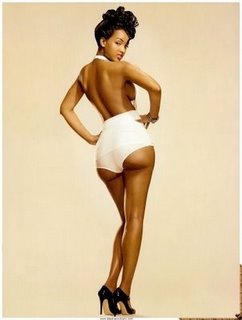
After my last post, inquiring minds are asking if I am myself a full-figured femme. Just to clear up any confusion and put the rumor mill to rest, here’s what I look like:

So now you know the truth! Picture me as a leggy Catwoman plotting world domination while sipping a Perfect Manhattan with 2 bourbon-spiked maraschino cherries.

I think voluptuous women are gorgeous, but that’s just not me. For the most part, I’ve always been thin and tall. I’m not curvy, I wear a size “A” bra, I don’t have Kim Kardashian’s ass, and that’s all OK with me. Please don’t tell me that you don’t like women who are “too skinny,” or tsk tsk about my size. (I don’t comment on your size, do I?) And don’t even think about saying to me, “you’re so small!” Uhh, no, I’m NOT. I tower over you, as a matter of fact, even when I’m not wearing heels!

Femme (and feminine) does not equal skinny, WASP, and conventionally pretty to me. I am an ally of fat femmes and other women of size. I love the Helena Rubinstein quote I used in my last post because I think it’s a reminder that beauty is about enjoyment (of food, life, etc)–not self-deprivation. I have issues with my body, like most other women, but being thin is not one of them. So, although it’s heresy to admit this in some feminist and lesbian circles, I will say it loud and say it proud: I love my skinny jeans, and I love being a fierce, skinny femme.

I hope we as femmes can talk more about body acceptance for women of all ethnicities, sizes, and abilities. *Blowing a kiss to whatilike and buddistfemme, who inspired this post!*

Sublimefemme Tells All, No. 4

Jenny, Schmenny….

Sublimefemme says “Eat your way to a fuller, more curvaceous figure!”*

Photo: The Amazing Queen Latifah as Matron “Mama” Morton in Chicago (2003)

*Quote by Helena Rubinstein in her autobiography-plus-beauty-advice book, My Life for Beauty (1965).

Femme Desires

I’ve been looking forward to Sinclair’s post about the Femme Conference, and it didn’t disappoint. If you haven’t read it, go visit Sugarbutch Chronicles and have a look. It’s called “In Praise of Femmes: The Architecture of Identity.”

Sinclair points to 5 ways to construct femme:
1) In contrast to butch
2) In community
3) Through language
4) Through fashion and style
5) Through theory [I would fold #5 into #3, since theory is language.]

I think these are all great, but I’m struck by the absence of the body and sexuality from this list–a rather surprising absence coming from the dashing Top Sex Blogger of 2008!

Doesn’t the body and sexuality factor into some of these 5 categories? For example, fashion isn’t just about clothes. It’s also about sculpting the body (through exercise, diet, cosmetic surgery, etc) and stylizing the body in various ways, including the refusal to “manage” the body to conform to mainstream ideals of femininity. I think the celebration of fat/voluptuous bodies by many femmes is great example of this form of femme fashion!

What about the importance of sexual power and pleasure for femmes? Based on what I’ve heard about the Femme Conference, I would imagine that people would be talking about how femmes use sexuality and their bodies to construct their identities. (For those of you who were there, please fill me in!) If people were *not* talking about this, what does it mean? Does it reinforce stereotypes that femmes are (only) pillow queens, or that it’s butches who are “doers”–i.e. have active sexual desires and sexual agency?

I worry when we seem to be echoing traditional scripts that cast “boys” as desiring subjects and “girls” as objects of desire. For similar reasons, I think it’s worth questioning whether we want to define femme only or primarily in relation to butch. I’ve been learning a lot from those of you who’ve been sharing your own definitions of femme, and one of things I’m trying to do is understand femme on its own terms–as its own independent gender. (Thanks to Chaia for challenging me on this!) I think the discussions that many of us have been having about supporting each other as femmes is, to some degree, a step toward reframing (queer) femininity not in competition with other femmes but in relation to them. That’s about the independence and autonomy of femme.

OK, I know what you’re thinking–the whole butch/femme thing. I realize that for many of us, femme makes sense in relation to butch. While this is true for me on a personal level, I think we run into problems when we say that butch is central to what being a femme means. This seems to me to sidestep the fundamental question for femmes: who are we?

For me, this is a question that goes much deeper than fashion and style (I know, sacrilege!). I genuinely delight in “doing” femme, but being a femme is not just about clothes, style, nails, etc., at least for me. But hey, you might say: it is for me! Ok, great, but here’s the problem. If you only tell me about your style–how you perform femme on an everyday basis–that still doesn’t tell me what the meaning and intention of your style (or femme performance) is for you.

So, my questions are:
Do you define femme in relation to butch?
How are sexual pleasure, your body, and your desires a part of your identity as a femme?
If you have a particular femme or feminine style, what is the meaning of that style or gender performance for you?

I’d love to hear from femmes and femme allies, especially if you’ve been reading and haven’t yet joined the discussion. Please jump in and comment, because I want to know what you think!

Sublimefemme Tells All, No. 3

For an excellent upper arm workout, shake your own cocktails.

//www.ffadgallery.com/

Photo Credit: Ferguson Fine Arts and Design - http://www.ffadgallery.com/

The Whole Butch/Femme Thing, Part 2

First, thanks to all of you who have been reading and commenting!

Second, I want to clarify a few things. Yesterday’s post was not intended to insult or rant against another blogger. “The Whole Butch/Femme Thing” isn’t a personal attack–or even an attack at all. It’s a critique. I wrote that post because I felt a blogger did something that a lot of otherwise decent people seem to do on the internet–use their blogs as a forum to make disrespectful comments about people they don’t even know. I guess it’s easy to forget that the blogosphere is made up of real people with real feelings. (Lest there be any doubt, I am very much a real person with real feelings, convictions and commitments!)

So, to all of you fabulous readers and lurkers out there, I hope we can continue to have a meaningful discussion about these issues, regardless of whether or not the person who provoked the discussion is interested in participating.

In that spirit, I’ll get things going by making a follow-up remark. I agree with whatilike‘s comment about ethnicity and butch/femme. I think Annoyed Lesbian’s theory implies that certain (all?) ethnic groups with immigration histories and strong religious beliefs/cultural pride are “backwards” because they’re perpetuating traditional gender norms.

To be fair, I think it’s worth acknowledging that ethnicity *does* play an important role in defining family structures and values for people with diverse backgrounds. For example, I remember reading about how African American and Jewish families have certain similarities because of their histories of oppression, particularly the legacies of slavery and the Holocaust. However, to my knowledge (which admittedly is not expert), ethnicity influences family dynamics in complex ways and often varies considerably from group to group. To make blanket assertions about the traditional gender roles of all ethnic groups who immigrated to the NY area just seems like a reckless overgeneralization.

The Whole Butch/Femme Thing

“For all that I love the east coast, one phenomenon baffles me. Girls, what IS it with the whole butch/femme thing?”

This opening sentence belongs to a disheartening post I came across today, in which the blogger–a new New Yorker who describes herself as a fleece-wearing lesbian from the west coast–tries to figure out what the attraction to butch and femme genders is all about. Why? Because, according to her, butch/femme is “rampant in these parts and is more than a little annoying.”

Seriously. I’m quoting exactly from her post.

So, here’s my response to you, Annoyed Lesbian:

I’m sorry you feel like you’re getting “the short end of the stick” because, as you see it, there aren’t enough women in NY who “yearn for short-haired girls with a penchant for plaid.” But if you want people to accept and appreciate you, it seems to me that accepting difference in others would be a good place to start.

As for your two theories about why queer women might find butch and femme genders appealing, let me see if I understand them correctly. Your theories are (1) Butch/femme is a “post-feminist reclamation of 50s identity;” and (2) it is the inheritance of ethnic groups (Italian, Irish, Jewish, Dominican) who settled in the NY area and “perpetuate relationship roles” from generation to generation.

I’ll let others tell you what they think of how you have characterized our lives, experiences, and desires. But let me ask you this: why do you feel the need to invent theories about other lesbians who happen to have genders that are different than yours?

As I’ve said here before, last time I checked there was no “right” or “wrong” way to be a lesbian. I try to live my life by respecting and honoring ethnic, sexual & gender diversity–including short-haired girls with a penchant for plaid.

Good luck in your quest for love and happiness,
SF

What Makes (Me) a Femme

Long, long ago in a gender galaxy far, far away…

…I was butch!

I know what you’re thinking: how could your favorite ravishing femme queer theorist–who is typing these words with perfectly manicured red nails–have ever been butch? But it’s really true, my lovelies, I swear. I had Hilary Swank’s haircut in Boys Don’t Cry, stomped around in big Timberland boots, got my clothes from the men’s department, and my only grooming products were shampoo, soap and chapstick. In the community that I came out into, to be a lesbian meant that you were butch, andro, or flannel, period. I actually had no idea that other kinds of lesbian genders existed!

I’m writing this piece in response to Hussy Red’s terrific post “The Femme Archive” on The Femme Guide, which asks all of us to share our own stories about how we’ve come to our identities as femmes. So, I’ve been asking myself: Who and what inspired, affirmed and taught me as I traveled the long and winding road to femme? What made me feel authorized to express my own queer femininity? Here are my answers, in no particular order:

1. Femme Icons. These are the brave, beautiful women who inspired me and educated me about femme, even if I never knew them. For me, Joan Nestle, Susie Bright, and Amber Hollibaugh are at the top of the list; their brilliance, political activism, magnetic eroticism and kick-ass femme attitudes made me think, that’s what I want to be when I grow up! Femme icons from earlier eras have also been a big source of inspiration for me. If you’ve read my post on Greta Garbo, you know that I love old Hollywood glamour and the beautiful and talented lesbian and bisexual women who serve, for me, as icons of queer femininity. (For the scoop about Garbo, Tallaluh Bankhead, Mercedes de Acosta, Marlene Dietrich and more, check out Diana McLellan’s The Girls: Sappho Goes to Hollywood!) But Femme icons are also people we see everyday. For me, getting to know and work with smart and successful femme/feminine lesbians who were my teachers and mentors was an incredible blessing. By modeling their own versions of femme in their lives and work (from lipstick lesbian to campy, queer femme identities), they introduced me to ways of inhabiting lesbian gender that I had never imagined possible.

2. Butch/femme and lesbian history. Learning about the history of butch/femme in the 40s, 50s and 60s was incredibly important to me. Reading Leslie Feinberg’s Stone Butch Blues–which was itself a life-changing experience–motivated me to learn more about butch/femme working-class communities in postwar America. I was so inspired and impressed by how brave these women were, and how hard they had fought to carve out spaces for public, visible lesbian communities under extremely oppressive social conditions. In fact, the main reason I began to identify as a femme (as opposed to lipstick lesbian, for example) is precisely because I wanted to connect with that past. This is still true for me today; calling myself a femme is one way I strive to honor the struggles, sacrifices, and hard-won victories of butches and femmes and carry them forward into the present. To learn more about butch/femme communities in the 50s, I highly recommend Elizabeth Lapovsky Kennedy and Madeline Davis’ wonderfully readable oral history, Boots of Leather, Slippers of Gold.

3. Gay men. What can I say? I’m a huge fan!! Meet me at the intersection of Oscar Wilde and John Waters. Gay men helped me to embrace my identity as a femme because they offered me a space to celebrate femininity with joy and a sense of playfulness, which felt worlds removed from the shaming, suspicion or just perplexed confusion that I felt from some lesbians and feminists. In the gay world, I wasn’t just “tolerated” for being femme, I was loved and respected. Gay male friends who appreciated beauty, fashion and glamour also taught me a thing or two about queer aesthetics and camp, both of which changed the way I look at the world. Most importantly, they inspired me to approach gender and sexuality with a sense of adventure and frivolity that has shaped how I “do” femme.

4. Facing My Own Pain and Gender Oppression. It wasn’t until a few years ago, when I had an epiphany sitting in the audience at a GenderPAC conference, that I realized how hurt I’ve been from the years of being shunned in lesbian/feminist bookstores (for being too femme) or being marginalized in the straight world (for being too queer). At GenderPAC, Riki Wilchins was talking about the oppression faced by femmes, which often isn’t recognized because we do not (typically) transgress gender norms. Suddenly, tears filled my eyes and I was overwhelmed by a powerful emotional reaction I had never anticipated. What was going on?

I went to the conference because I’m an ally of trans and genderqueer people, and I wanted to participate in the important education and advocacy work that GenderPAC does. But as I was listening to Riki speak, I realized that I was exactly where I needed to be–not for others, but for me. Coming to terms with my own gender oppression not just as a woman but also as a femme has enabled me to work towards healing the pain I didn’t even realize I was carrying inside me. It has helped me to politicize my own experience as a femme in ways I hadn’t previously, because now I understand and appreciate the depth of that experience not only with my head, but also with my heart.

By Way of a Conclusion. All of this doesn’t quite tell you how I travelled from the andro butch of my younger years to the capitivating vision of femme-ininity I am now, but these snapshots of my journey are at the core of what has made me a femme. I hope you’ll go to The Femme Guide and write about what made/makes you a femme, because I can’t wait to read your stories! Regardless of how we identify or the differences that shape our lives, we all have *so much* to learn from each other.

Sublimefemme Tells All, No. 2

There’s no such thing as heels that are too high. They’re called “sit-and-look-pretty-shoes.”

Design a site like this with WordPress.com
Get started